Archive for the ‘Horse Knowledge’ Category

Hoof crack repair

Hoof Cracks happen! Sometimes through imbalanced hooves, load factors, a bad step or an injury.

We always want to explore and find out why these cracks happen, so we can take the necessary remedies or precaution the next time to prevent them.


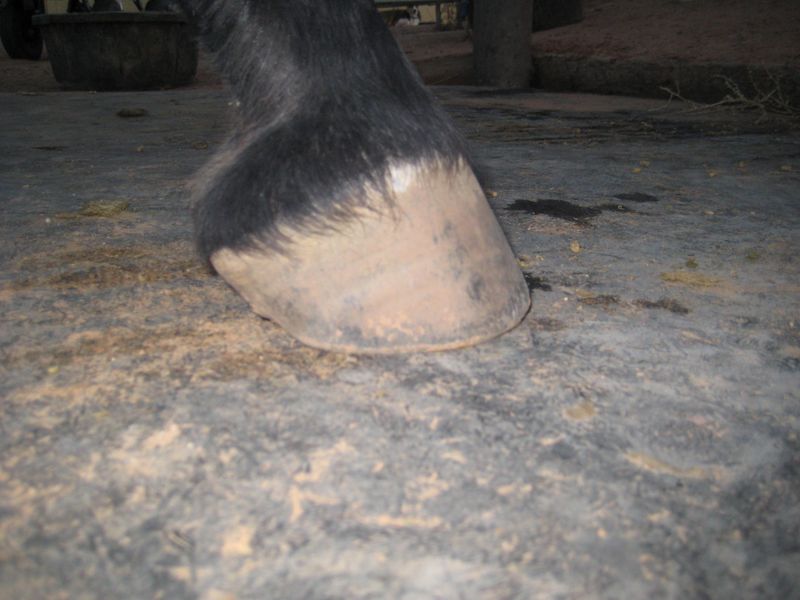
This hoof crack in the heel was caused by an accident.


First consideration: Patching or leaving it alone. Leaving it as is, we run the risk that some rock might wedge into it and widen the crack. Forces on the heel could also push the heel even more under.

Patching can be done very easily with Vettec Superfast.

First, however, we prepare the hoof and crack for it. For the Vettec Glue to stick, we need to clean, roughen and dry the crack and surrounding area.
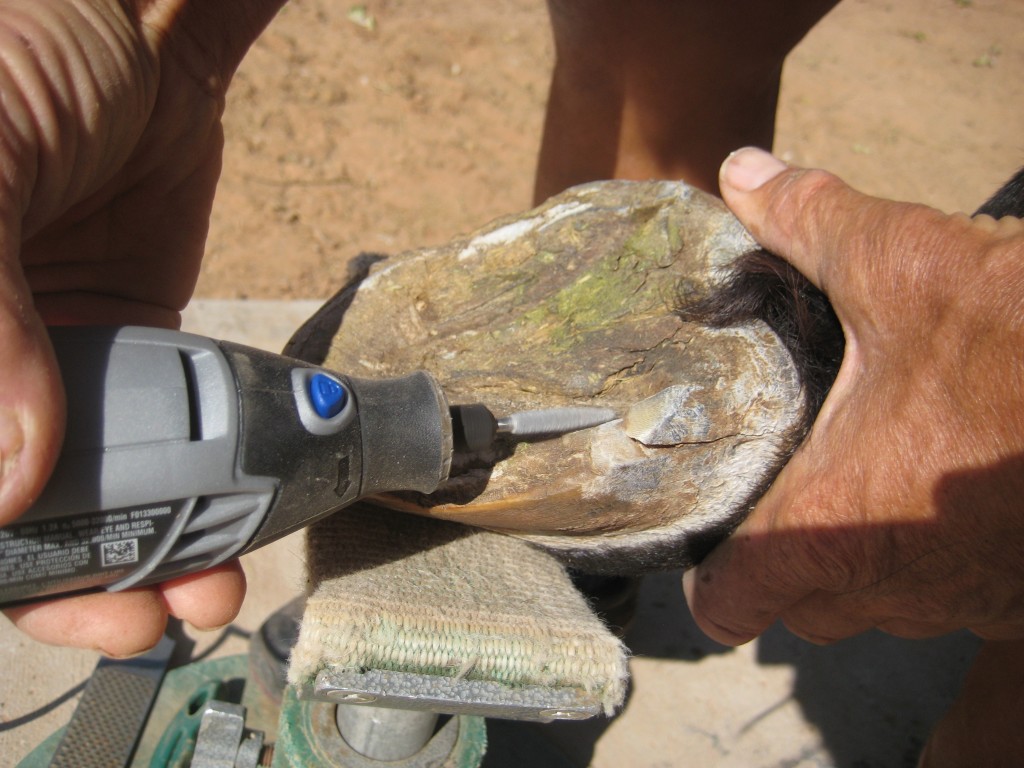
A Dremel tool works best for cleaning and roughening the area.

Drying the affected area is next. A heat gun works well.
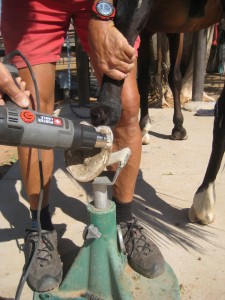


Next, we apply Vettec Superfast liberally in and around the crack.
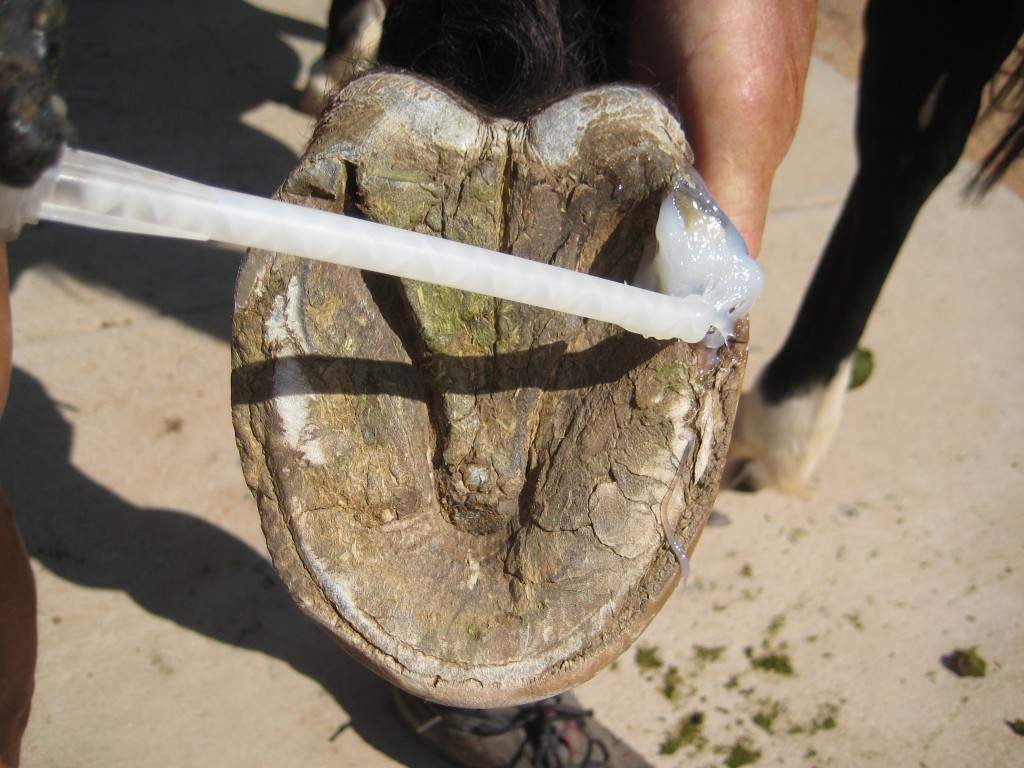
After waiting about 5 minutes, we can start rasping off the excess glue material.
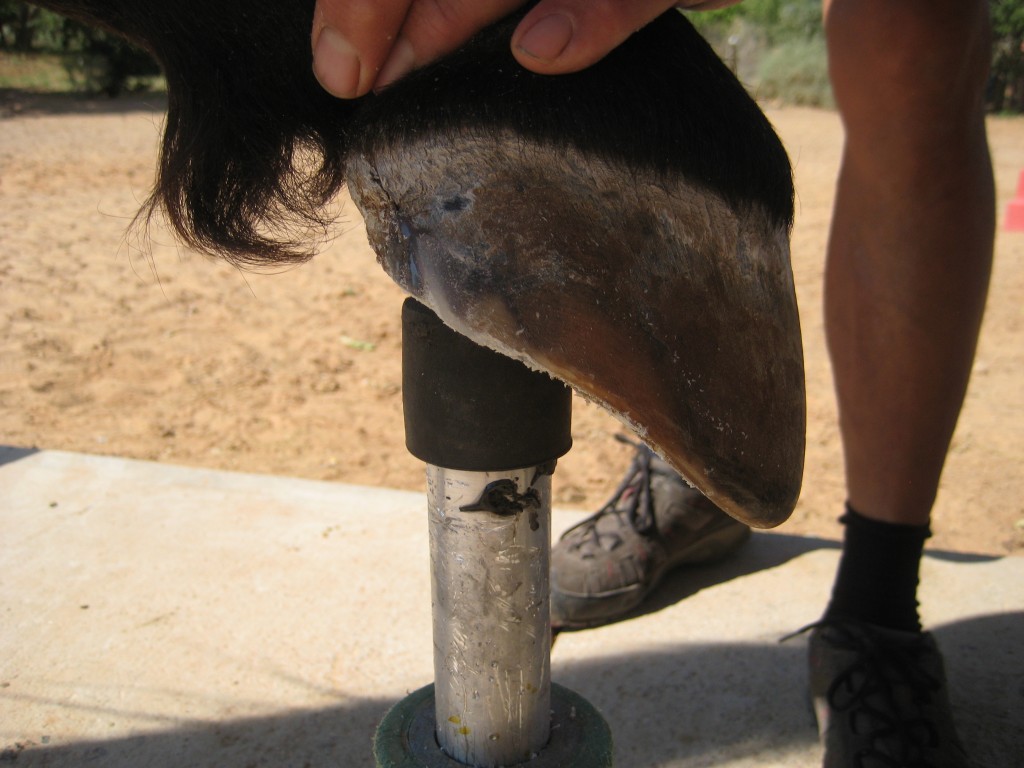
The crack is now patched, the horse can resume his normal work routine.

If done properly, these Vettec glues can hold a crack together for months or till it is all grown out.


Another tip from the Global Endurance Training Center

by

Christoph Schork
Teeth and Hooves

What do they have in common?

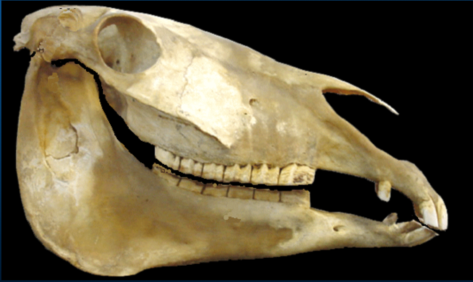
Skull

Horse hoof

IMG_1909

At first sight, teeth and hooves of horses seem to be as unrelated as it gets. Comparing them anatomically, could it be that there are, however, common elements?

Hooves Teeth
Growth Period: lifelong lifelong
Speed: 5 – 8 mm per month 2 -3 mm per year
Trimming: 2 – 8 weeks 6 – 12 months
Material: hard outside/soft inside

hoof wall/sole

hard outside/soft inside

enamel/dentin

Functional Comparison

toes incisors
quarters and heels molars
frog tongue
sole lower jaw

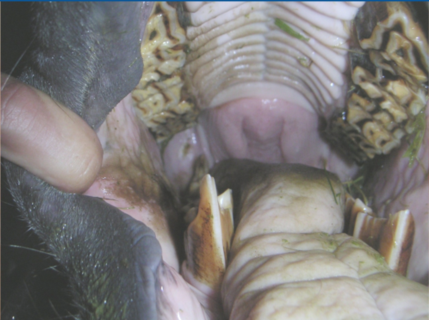
Bad molars

Neglected molars  (compare to high heels and lateral flares in hooves)

It is getting interesting, when comparing teeth pathology with hoof pathology.

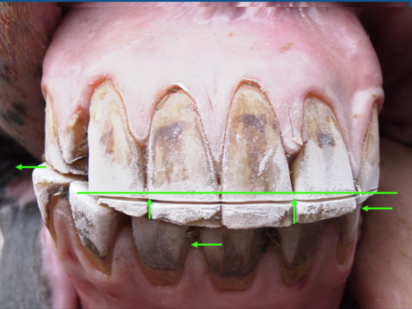
Front teeth

On this 16 year old gelding, we are observing a left descending ‘smile’ and misalignment with upper and lower jaw.

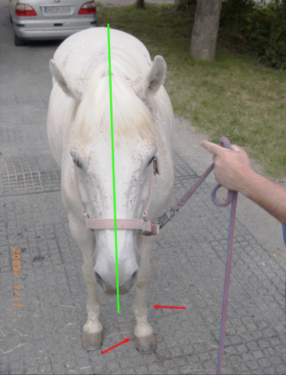
Photo below shows the effects on the posture of this horse:

the head is carried higher on the left side, left shoulder is elevated, slight flex to the right, front left leg turned out.

Horse with arrows

Right front is bearing weight on the M/L plane evenly, while the left hoof is loaded on the medial heel, resulting in possibly crushed heels and a lateral flare.

Even small changes in the angles and occlusions of the teeth influencing the jaw, the whole skeleton, tendons, ligaments and muscles of the horse.

Hoof care might as well start with proper teeth care. So many anatomical parts of the horse are interrelated and when we are solely looking at the hooves, we might just manage the same problem everytime without ever getting to the cause and root of the problem.

Regular dental check ups are vital not only for the horses health and digestion, but also for the soundness and proper hoof balance and growth.

This coming year, Global Endurance Training Center will be conducting more studies and comparing teeth pathologies  with hoof pathologies and development. We are also very curious if we can find any connection between teeth abnormalities and club feet, teeth and scelletal and muscle changes. We will keep you posted on our findings.

Christoph Schork

The Staff at GETC wishes all our readers a Merry Christmas and successful New Year filled with fun and happiness with all your horses and other animals.

Christoph Schork and Dian Woodward